Frontiers of the Roman Empire – Dacia
👍0
👎0
🧳
Frontiers of the Roman Empire – Dacia
Author: –, License: Description is available under license CC-BY-SA IGO 3.0
Description is available under license CC-BY-SA IGO 3.0
source: UNESCO/CPE
Description is available under license CC-BY-SA IGO 3.0
source: UNESCO/CPE
Description is available under license CC-BY-SA IGO 3.0
source: UNESCO/CPE
Description is available under license CC-BY-SA IGO 3.0
source: UNESCO/CPE
Description is available under license CC-BY-SA IGO 3.0
· Source
About this place
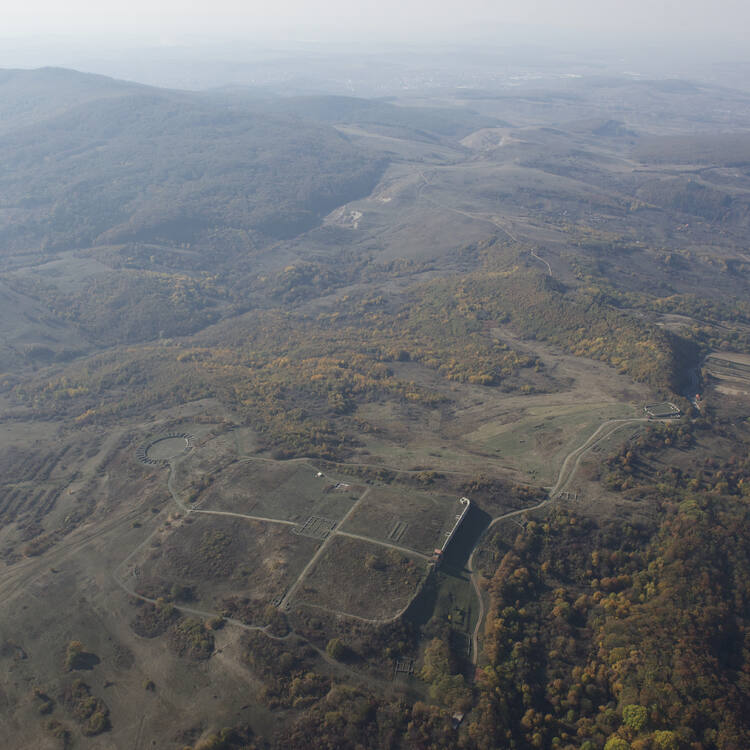
From 500 BCE on, the Roman Empire extended its territory across parts of Europe and North Africa until its frontier totaled some 7,500 kilometres by the 2nd century. The Romanian segment, the Dacian Limes, was operational from 106 to 271 CE. The property comprises 277 component parts and represents the longest, most complex land border of a former Roman province in Europe. Traversing diverse landscapes, it is defined by a network of individual sites that include legionary fortresses, auxiliary forts, earthen ramparts, watch towers, temporary camps and secular buildings. Dacia was the only Roman province entirely north of the Danube River. Its frontier protected it from ‘barbarian’ populations and controlled access to valuable gold and salt resources.
Further reading
Source and License: Description is available under license CC-BY-SA IGO 3.0
Description is available under license CC-BY-SA IGO 3.0
source: UNESCO/CPE
Description is available under license CC-BY-SA IGO 3.0
source: UNESCO/CPE
Description is available under license CC-BY-SA IGO 3.0
source: UNESCO/CPE
Description is available under license CC-BY-SA IGO 3.0
source: UNESCO/CPE
Description is available under license CC-BY-SA IGO 3.0 ·
Discussion
No posts or comments for this place yet.
Please log in to submit a comment.
More articles load as you scroll
↓
Related Articles
Wooden church of the Archangels in Jac, Sălaj
heritage site in Sălaj County, Romania...
Wooden church of the Archangels in Brusturi, Sălaj
heritage site in Sălaj County, Romania...
Wooden church of Saint Nicholas in Creaca, Sălaj
heritage site in Sălaj County, Romania...
Wooden church of the Archangels in Ciumărna, Sălaj
heritage site in Sălaj County, Romania...
Wooden church of the Archangels in Borza, Sălaj
heritage site in Sălaj County, Romania...
Aghireș
village in Sălaj County, Romania...
❮
❯
1 / 2
Hallstatt-Dachstein / Salzkammergut Cultural Landscape
The Hallstatt-Dachstein/Salzkammergut region is a breathtaking alpine landscape in Austria,...
Yellowstone National Park
The vast natural forest of Yellowstone National Park covers nearly...
Saint Hilarion Monastery/ Tell Umm Amer
Situated on the coastal dunes in Nuseirat Municipality, the ruins...
The Emergence of Modern Human Behaviour: The Pleistocene Occupation Sites of South Africa
This serial property contributes to the understanding of the origin...
The Flow Country
The serial property, located in the Highland Region of Scotland,...
Umm Al-Jimāl
The property is a rural settlement in northern Jordan that...
 alpha
NOW FEDERATED!
alpha
NOW FEDERATED!